The Agentic Workflow Gets Personal - My 'PostVibe Coding' Era
Builting a NostrKey suite (Chrome ext, Android app, site + more) in just 5 days/one weekend using agentic AI workflows. Not magic: 10k hours of prior LLM reps & the intuition to scope, route models & collaborate like a pro. PostVibe Coding & AI as true co-pilot. Start building!

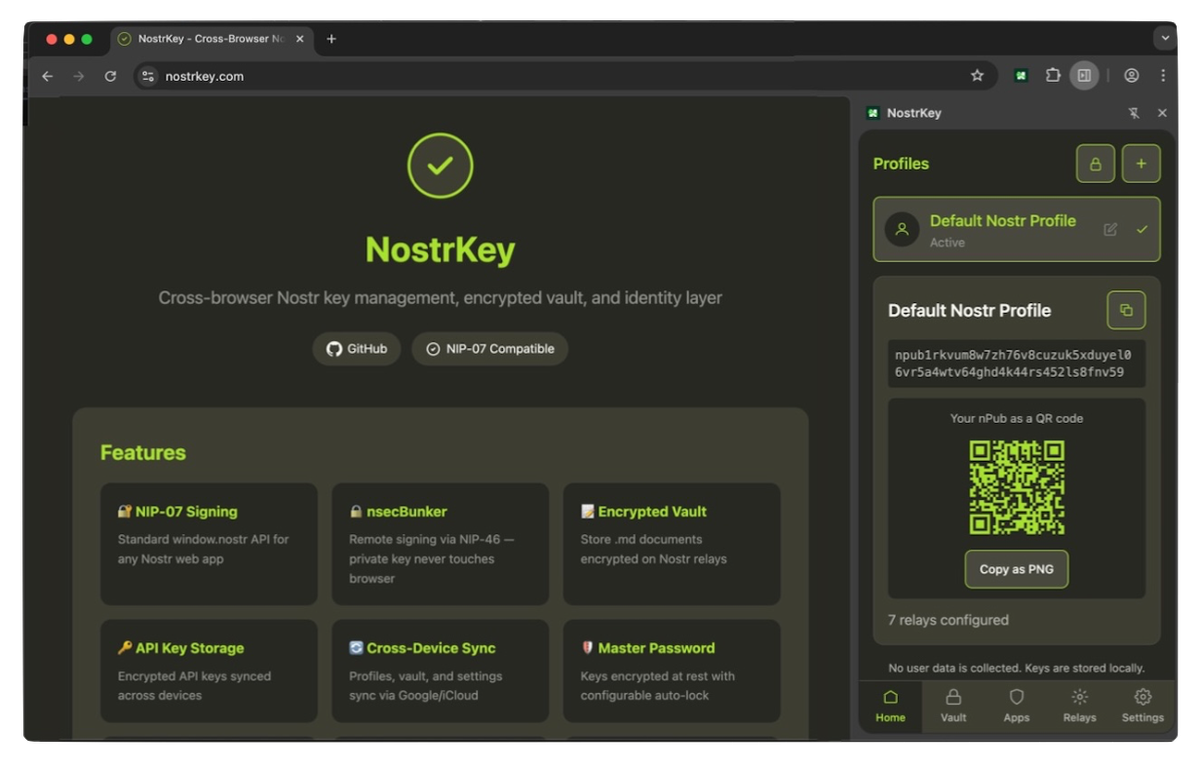
Last Friday I checked out an abandoned GitHub repo. Today is Wednesday and a newly written NostrKey Chrome extension is live. The Android app is in the store. The NostrKey website is up. And an Apple's review queue has the Safari plugin and iOS app in it.
Five days!!! - One weekend of actual building.
Here's what made that possible — and it wasn't the AI.
The 10,000 Hours Nobody Talks About
I've been building with LLMs for over a year now (Application Development). Hackathons. Side projects that went nowhere. Song lyrics fed into Suno. Market research for products that didn't ship. Article drafts bounced between Windsurf & Claude & Grok & whoever else LLM agent wise would participate . More than a few articles about this has shown up on Humanjava as quiet inbound traffic; particularly the Ian M Banks article on the future of AI.
Realistically most of these activites didn't add up to anything valuable. The output wasn't the point. The feedback loop and process of discovery was.
Moving across the space of AI tools; learning each models gifts, when a model was helpful and when it was spinning in the wrong direction.
Before prompt-engineering was a thing, I'd ask questions and see what came back. Learning to recognize when to push and when to restart. There is a route; which model for which task, which prompt style for which problem. And it's not a schooled education but one earned from trial and error. A session at a time across projects, and through many failed attempts. But, from failure to success, it's a spectrum of experience worth embarking on.
When the talk of "the future of AI" is about being a generalist. That's it. That's the skill. Not "talking to AI". Not arguing when the result is incorrect. It's learning to scope the problem into achiable context windows. Learning to collaborate with the platform in ways that fit its memory space and processing capabilities. Knowing when it's extending you and when it's wasting your time.
What the NostrKey Build Actually Looked Like
Friday: I had long been thinking of building a Nostr client. And the one i was using was abandonned. And me being me; I opened it in Claude Code. Asked questions. Got context. Decided to build.
Saturday: Rebuilt Nostr packages I'd written two years ago ( NPMJS ) — code I'd tried to fix with ChatGPT back then and never got right. This time, with the routing skill, it clicked.
Sunday: Testing the Chrome plugin locally. Fixing UX. Iterating.
Monday: Submitted to Chrome and Android stores. Launched the website.
Across all the planning, and code generation, my work with Claude Code was collaborative more than anything else. Just like working with a co-worker, we discussed user experience and goals. Took a look at complexity and mostly scoped our work into chunks that were easy to digest. I couldn't have built a product this complex, and this quickly, without the hours I'd already put in.
The Part That Matters for You
That intuition doesn't come from reading about AI. It comes from building with it. Repeatedly. In low-stakes environments where failure is cheap.
Nate B Jones put out a video recently about model distillation — how cheaper models are trained by copying outputs from frontier models like Claude. His point: distilled models look fine on benchmarks but break on sustained agentic work. The kind of work where you need a model to think for eight hours, route around obstacles, use tools in combinations nobody anticipated.
That resonated. Because what I've learned in my 10,000 hours is exactly how to feel when a model is hitting its edge. When it's generalizing versus when it's pattern-matching. When to trust it and when to take over.
The Invitation
Don't be a stranger. Hit me up on Twitter (link to profile). I'm not here to tell you you're behind. The technology is transformative. But the transformation isn't automatic. It's earned. One session at a time. One project at a time. One hour at a time.
I'm here to say: where in your work could you start?
Write something with an LLM. Research something. Build a small tool. Notice where it helps. Notice where it doesn't. Build the feedback loop.
Not to replace yourself. Not to hand everything to an AI and hope for magic. But to find the places where a collaborator — one that's good at finding relational patterns, surfacing options, iterating fast — could extend what you already do well.
The people who put in those hours now will be the ones who see their future clearly when the landscape shifts. Not because they're smarter. Because they've done the reps.
This is me, building in public. NostrKey is live and open source. Give it a download, or if you're into it, fork it & give it a star. And for those interested in AI Safety, the Tomorrow Test framework is in progress... and the work continues.
Note: This article was written by me (Vergel) with a good dose of editing and re-framing by Claude. The final draft is mine, but Claude's input was invaluable.